In the reliability testing of electronics, automotive and semiconductor industries, rapid temperature change and high-low temperature shock test chambers are core devices. Both simulate temperature environments but differ significantly in technical logic, test purposes and applicable scenarios. Improper selection may cause distorted test data and delayed R&D cycles. Based on practice, this article analyzes their core differences and provides scientific schemes for accurate model selection.
I. Core Technical Differences: Principles and Parameters
The core difference lies in temperature change mechanisms, leading to variations in parameters and structural design, addressing different test pain points.
(I) Working Principle: Continuous Gradient vs. Instant Switching
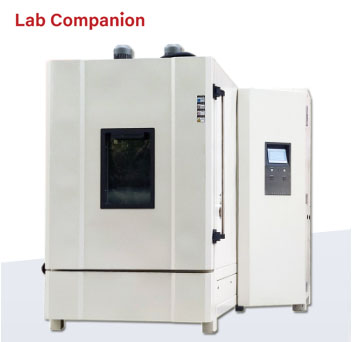
Rapid temperature change chambers realize stable temperature rise/fall at a set rate via cascade refrigeration and heating modules, simulating progressive temperature changes. They precisely control temperature slope to avoid overshoot.
High-low temperature shock chambers adopt a two/three-chamber structure, transferring samples between temperature zones in seconds to simulate sudden cold/heat shocks. Their core is to test material tolerance via thermal stress from sudden temperature changes.
(II) Key Parameters: Different Focuses
Rapid temperature change chambers focus on load temperature change rate, control accuracy and uniformity (typical range: -70℃~180℃), suitable for accelerated life testing and compliant with relevant standards.
High-low temperature shock chambers focus on temperature recovery time and extreme range (-80℃~200℃), with fast recovery, suitable for extreme condition simulation and equipped with sample protection.
(III) Structural Design: Single-Chamber vs. Multi-Chamber
Rapid temperature change chambers have a compact single-chamber design for space-limited laboratories and support automatic docking. Shock chambers are larger with independent zones, optimized to reduce crosstalk and customizable with explosion-proof modules.
II. Application Scenario Guide
(I) Rapid Temperature Change Test Chamber
Suitable for slow temperature changes, it is used for functional stability and accelerated life testing in automotive electronics, consumer electronics and communications.
(II) High-Low Temperature Shock Test Chamber
Suitable for instant temperature changes, it tests material and packaging reliability in semiconductors and aerospace, pre-exposing thermal expansion-related defects.
III. Selection Decision and Manufacturer Advantages
Selection core: Match product environment and test purpose — rapid chambers for gradient stability; shock chambers for extreme tolerance; large/high-heat samples prefer rapid chambers.
Domestic brand advantages: High cost-performance (lower price/energy consumption than imports), strong customization and efficient localized after-sales services.
IV. Conclusion
The two devices are complementary. Selection should align with actual working conditions, not just parameters. High-quality domestic brands provide standardized and customized solutions, supporting domestic equipment replacement for reliable testing.






 Obter uma cotação
 Rede IPv6 suportada